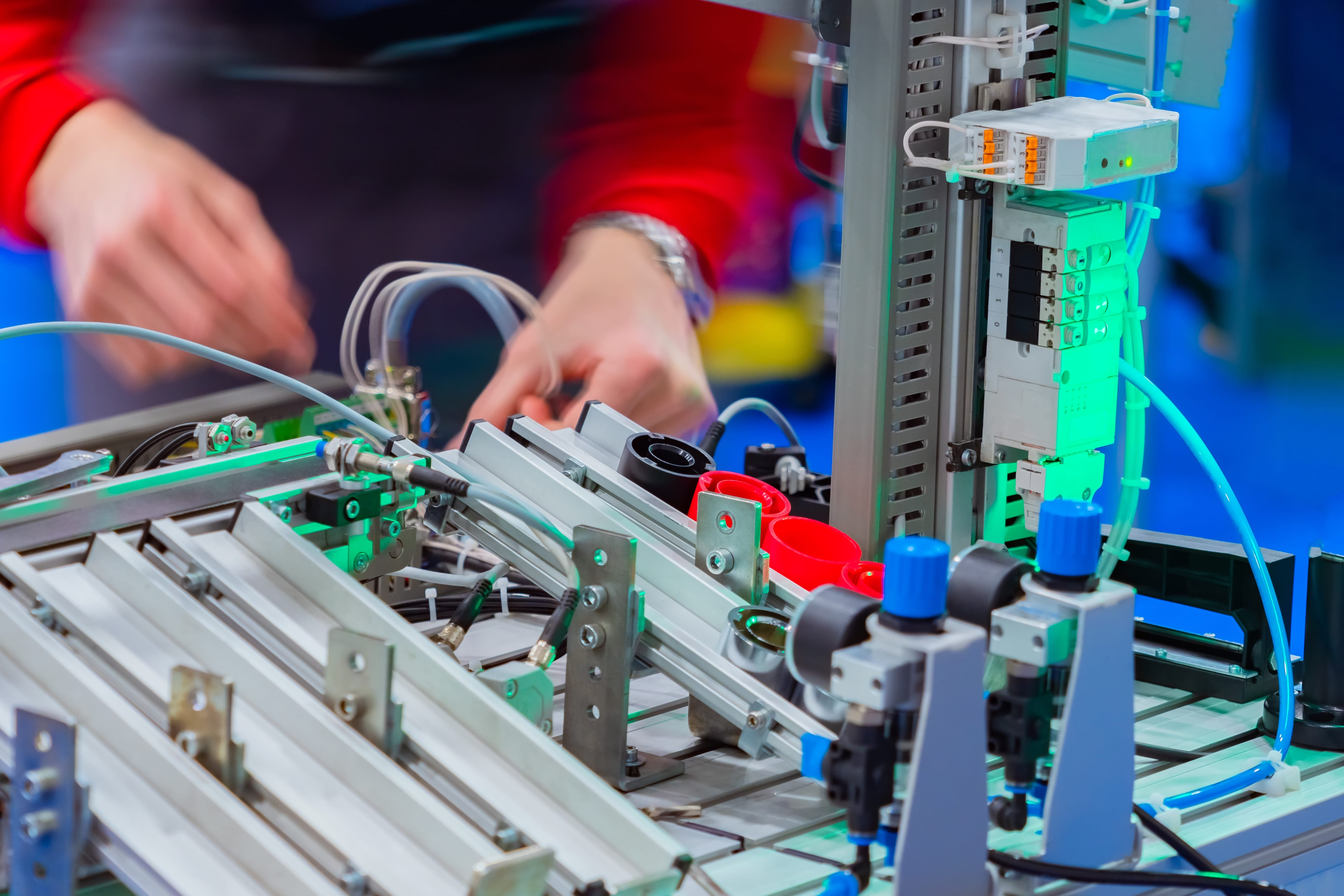



Assembly Fixture Services
Deeply embedded in electronic, semiconductor, and medical device supply chains, MCPi provides comprehensive, customized assembly fixture solutions. We seamlessly integrate Design for Manufacturability (DFM) into our 3D CAD modeling and implement physical Poka-Yoke (mistake-proofing) mechanisms to prevent operators from missing or reversing parts.
Utilizing advanced multi-axis CNC machining, we precisely fabricate components from aluminum alloys, POM, and ESD-safe anti-static materials. Furthermore, we adopt a single-setup clamping process to eliminate accumulated tolerances while integrating automated mechanisms like pneumatic cylinders and toggle clamps. Validated by advanced CMM metrology, our critical positioning accuracy is held to micron-level tolerances, ensuring superior production yields and process repeatability for your assembly lines.
Deeply rooted in the semiconductor, AI server, and medical device supply chains, MCPi provides high-end assembly jig and fixture solutions spanning from DFM collaborative design to micron-level output. In the early stages of development, we introduce design software for motion and interference simulations, eliminating design errors from the source and integrating physical error-proofing (Poka-Yoke) into the structure. Utilizing advanced multi-axis CNC turn-mill multitasking machines, we precisely machine materials such as aluminum alloys, engineering plastics, and anti-static materials into shape. By eliminating cumulative tolerances through a "single-setup" process, we seamlessly integrate air cylinders and clamping mechanisms. Finally, combined with BLUM in-machine measurement and CMM verification, our positioning accuracy is strictly controlled at the micron level, ensuring ultimate repeatability and high yields for production lines.
Equipped with a professional software and hardware design and R&D team, MCPi introduces design software in the early stages to perform motion and interference simulations, precisely eliminating errors from the source while flexibly integrating software control, signal dispatching, and automated pneumatic mechanisms. Utilizing advanced multi-axis CNC turn-mill multitasking machines, the team implements the "Done-in-One" process to complete the entire machining sequence within a single setup, eliminating cumulative error and holding position and coaxiality within ≤ 5μm. Structural components are made of lightweight aluminum alloy paired with hard anodizing, and contact surfaces are composited with anti-scratch POM to protect the exterior. Furthermore, the team specializes in machining difficult materials such as PEEK, ceramics, and quartz required for semiconductor, AI, and medical processing. Combined with BLUM in-machine measurement and CMM verification, the software and hardware team can flexibly execute localized machine modifications or firmware adjustments when facing product changes, drastically saving mold modification costs for customers.
Customers choose MCPi because we break through traditional machining limitations, offering core competitive advantages in software-hardware collaboration and micron-level precision. In the early stages, our R&D team introduces software to perform motion and interference simulations, precisely eliminating errors from the source while flexibly integrating software control, signal dispatching, and automated pneumatic mechanisms. For manufacturing, we utilize advanced multi-axis CNC turn-mill multitasking machines to implement the "Done-in-One" process, thoroughly eliminating cumulative errors within a single setup and controlling geometric positioning and coaxiality within ≤5 μm. Contact surfaces are composited with anti-scratch POM to protect the exterior, and we further specialize in difficult-to-machine materials such as PEEK and ceramics required for semiconductor, AI, and medical processing. Combined with BLUM in-machine measurement and CMM verification, our software and hardware team can flexibly execute localized machine modifications or firmware adjustments when facing product changes, drastically saving mold modification costs.